



Peak Re targets sustainable growth in a more challenging market: CUO, Hough(仅提供英文版本)

首席核保官
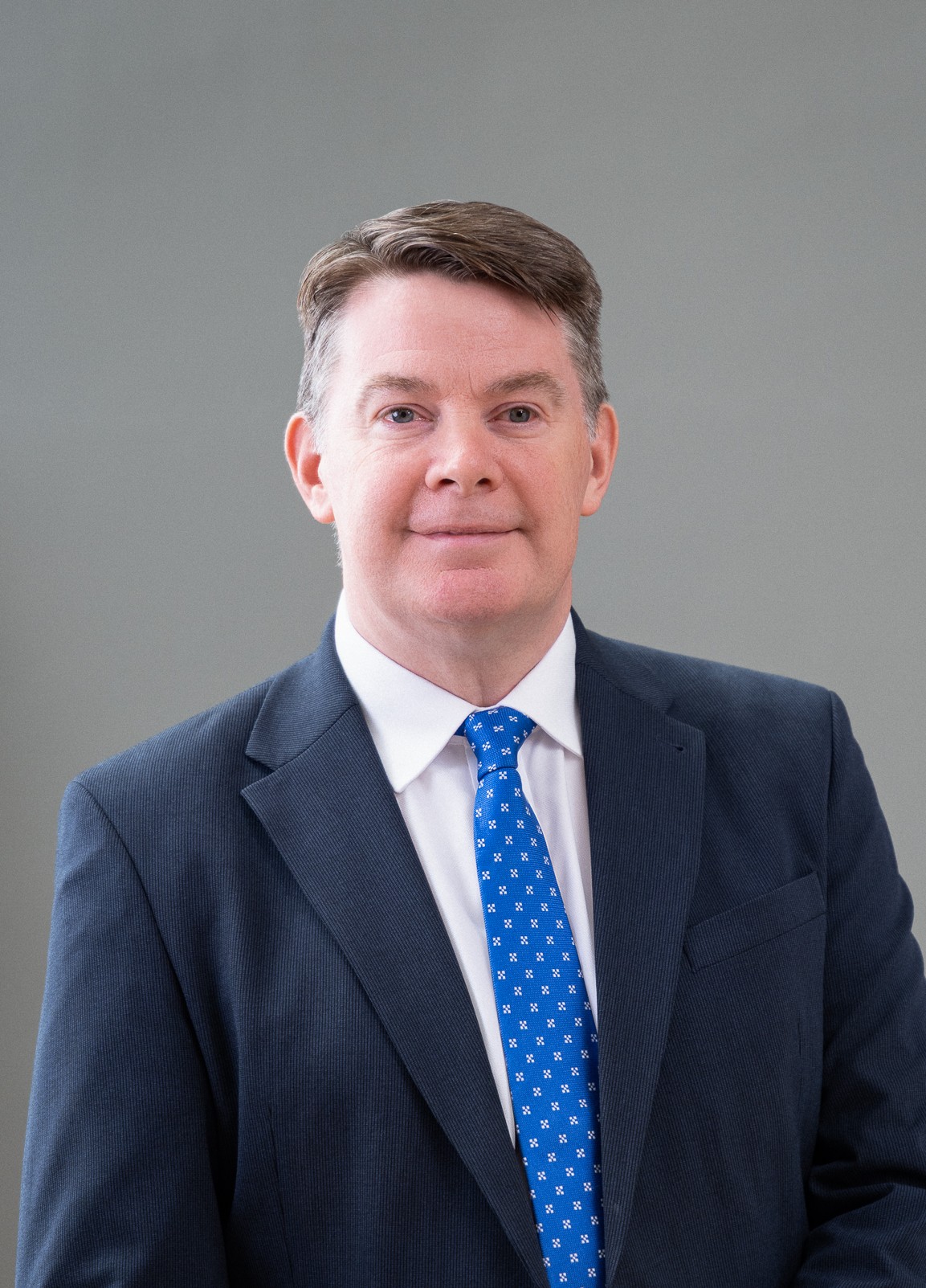
Peak Re, the global reinsurer, is targeting sustainable growth by broadening its capabilities and sharpening its strategic differentiation as competition intensifies and reinsurance pricing comes under increasing pressure, Chief Underwriting Officer (CUO) Philip Hough told Reinsurance News at the 2026 Rendez-Vous de Septembre in Monte Carlo.
The Hong Kong-based global reinsurer has enjoyed strong growth in recent times, but Hough said the changing market environment had prompted Peak Re to reassess how it can continue expanding while building a business that is better positioned for more challenging conditions.
“We’ve enjoyed a very positive trajectory of growth over the last three years, supported by a strong pipeline and strong underlying business momentum. However, when we looked at the business and the market environment in which we currently find ourselves – thinking about the increasing headwinds we expect over the coming years – it became apparent that our growth strategy needed greater depth and substance.”
That reassessment, Hough said, centres on building the capabilities needed to grow sustainably as competition and pricing pressure increase.
“We had to determine how to achieve growth in a more challenging market, where competition is intensifying and pricing is coming under more pressure. Sustainable growth requires a broader set of capabilities and clearer strategic differentiation,” he said.
Peak Re’s starting point for that broader strategy is its established position in Asia, where Hough said the company has built strong relationships with clients across the region, and he has “been particularly impressed” with the organisation in terms of the strength of the relationships and the nature of some of the bonds established with their clients across the region.
That strength is being weighed against a portfolio that remains concentrated in traditional property and casualty reinsurance, creating opportunities for Peak Re to expand into other areas.
“At the same time, our portfolio remains heavily focused on traditional property & casualty reinsurance. As we mapped our business against client needs, we realised that there are a number of areas where we’re not that relevant, one being specialty lines. We’ve also identified facultative reinsurance as another growth area. Both represent attractive opportunities for expansion and diversification.”
The focus on broader capabilities is particularly relevant in parts of Asia where economic and infrastructure development is generating demand across several specialist classes. Hough said Peak Re was already seeing this through its structured solutions offering: “There are some high-growth segments in the Asia region where we believe we can play a much larger role. Our entry into structured solutions in 2025 has demonstrated the value of bringing differentiated capabilities to our clients.”
Peak Re’s experience with structured solutions had shown the value of providing more tailored capital and risk-management solutions, which had been “extremely well received” and helped strengthen client relationships across several markets. The company now wants to build on that in Asia, where Hough sees further opportunities in certain lines of business.
“We see a lot of growth and demand right now in engineering, construction and technical lines, which are benefiting from long-term economic and infrastructure development trends. These are areas which – looking at the market trajectory over the next five years – should create attractive opportunities for growth.”
The same emphasis on building capabilities rather than pursuing short-term expansion is evident in Peak Re’s US strategy, Hough explained: “Our US business, written through our Peak Re North America subsidiary in Bermuda, has given us a very strong footprint in the casualty reinsurance space. There we’re specialising very much in low-limit SME-type business. We now see an opportunity to build on that platform by expanding beyond casualty into property and specialty lines.”
The next stage will involve strengthening the Bermuda team, with property expected to be the first area of expansion.
“We’re looking to strengthen our team in Bermuda to support this ambition. Property will likely be the first area of expansion, and we are well advanced in identifying a leader for this initiative, with the goal of having somebody in place by early next year.”
For Peak Re, however, entering US property is intended to support diversification over the longer term rather than capitalise on a particular point in the market cycle.
“This expansion is fundamentally about diversification for us because our US property book right now is relatively modest, which presents an opportunity to develop a more balanced and resilient portfolio over time. Importantly, this is not a short-term growth play; it’s part of a three- to five-year vision for where we want Peak Re to be. Our objective is to build scale thoughtfully and sustainably, rather than simply pursuing growth for growth’s sake.”
That broader portfolio should, Hough said, give Peak Re greater flexibility in deploying capital as market conditions change, and he added that “when you’re quite narrow in terms of what you offer, you tend to find yourself in a tighter situation in terms of capital deployment. A wider product offering will give us more spread, more diversity and more ability to offset some of the pricing trends that we’re currently seeing in certain lines of business.”
Despite contracting rates, Hough said Peak Re sees the US property market as an attractive entry point, with strong underlying business and underwriting discipline maintained over the past three years. While acknowledging that “a lot of people may ask” why the company would enter the class at this point in the cycle, he said that the “market is still quite attractive,” with earnings reflecting the strength of the underlying business.
The current environment, he added, remains different from the bottom of the previous soft market cycle. “If you look at the original market side, yes, we’re seeing price erosion, but underwriting discipline, terms and conditions are still strong, and stronger than they were back when we hit the bottom of the previous soft market cycle,” explained Hough.
That distinction feeds back into Peak Re’s longer-term approach to sustainable growth, with Hough stressing the importance of developing capabilities that can remain relevant through different market conditions.
He emphasised that it “is not about a short-term growth plan” for the company. “It’s more about building the longer-term capability, attracting the right talent to Peak Re, and building a sustainable franchise that can create value through the cycle.”
Looking towards 2027, Hough expects the market to become increasingly differentiated, with outcomes shaped more by individual client performance, risk quality and trading relationships. “There’s only so far prices can fall,” he said, adding that he expects greater differentiation based on those factors.
That shift is also feeding into the structure of reinsurance protections, with Hough pointing to increased demand over the past 18 to 24 months for aggregate sideways protections and structured solutions. He does not expect “a wholesale drop in attachment points,” but said these alternative structures are becoming an increasingly important part of the market.
Hough said the structures themselves have also evolved, however “there’s still more discipline in terms of attachment point and in terms of the clarity and definition of the structures as well. They’re more transparent than they used to be.”
That emphasis on discipline is consistent with Peak Re’s own underwriting approach, which Hough noted remains focused on selectivity and long-term relationships, “rather than pursuing opportunistic growth.”
As supply and demand continue to evolve, Hough expects buyers to keep exploring alternative structures and capital solutions, a trend he said is inevitable given the current imbalance but has not materially weakened market discipline. “We’ve seen elements of that trend over the last two years,” he said, adding that “clarity and transparency are still really very important features of the market today.”
That search for alternative solutions also feeds into Peak Re’s broader push into specialty reinsurance and the Lloyd’s market. He said: “Lloyd’s is certainly an area of interest for us, particularly from a specialty reinsurance perspective. Although it’s still too early right now to say what our long-term approach may look like. We are looking at, ideally, establishing a more meaningful footprint within the Lloyd’s market over time.”
Hough said Peak Re is “currently evaluating a number of options that would allow us to access Lloyd’s business, deepen our knowledge and understanding of the Lloyd’s market and build the capabilities required to participate more actively in the future.”
He explained that the rationale for exploring the market was also linked to Lloyd’s position as “one of the world’s most important specialty insurance and reinsurance platforms,” which “offers access to business that can be difficult to reach directly from Hong Kong.” While “this is very much a medium- to long-term strategic initiative,” Hough said “it is an area we are actively exploring.”
Turning back to Peak Re’s core Asian markets, Hough stated that the reinsurer continues to benefit from a number of strong, long-standing trading relationships in China.
“Again, we’re selective with who we work with in China, but having that breadth of support across different lines of business does provide meaningful differentiation in an increasingly difficult market,” he said.
While growth in China is becoming more challenging, Hough said Peak Re remains focused on portfolio performance, underwriting quality and profitability.
India, meanwhile, has emerged as one of Peak Re’s strongest growth markets. “India has been one of our strongest growth engines in recent years. We were one of the early entrants into GIFT City, where we established our branch operations. That has positioned us well to lead and expand our business beyond property into other lines, casualty and specialty in particular.”
Hough concluded: “Today, we’re one of the larger players in the Indian market and benefit from strong relationships with our trading partners. Alongside China, India will continue to be one of the most important drivers of our Asian growth strategy in the years ahead.”
The article was first published on Reinsurance News on 18 September, 2026. Please refer to the full article here.
更多文章

星期一 2026年09月21日
| 1 分钟
|
谷豪明

星期四 2026年09月10日
| 5 分钟
|
Philip Hough

星期三 2026年09月09日
| 5 分钟
|
施哲勇

星期二 2026年09月08日
| 1 分钟
|
谷豪明

星期二 2026年09月08日
| 5 分钟
|
Philip Hough

选择鼎睿
为您保驾护航
为您保驾护航